
No Draws Allowed: The Leagues Cup Rule That Changes Everything

In most soccer competitions, the final whistle can come with neither team winning.
Not in Leagues Cup.
When MLS and Liga MX clubs meet in Leagues Cup, a match tied after 90 minutes doesn't simply end with each team taking a point. The teams go straight to penalties.
No extra time. No traditional draw. Somebody has to win the shootout.
It sounds like a small change to the laws we're accustomed to seeing in league soccer, but it changes the feeling of the entire competition.

90 Minutes Isn't Always the End
During Phase One, 36 clubs — 18 from MLS and all 18 Liga MX teams — compete in three matches against teams from the opposite league.
The scoring system makes every result matter:
Win in 90 minutes: 3 points
Win on penalties: 2 points
Lose on penalties: 1 point
Lose in 90 minutes: 0 points
That means a 1-1 match after 90 minutes isn't finished.
There is still another point on the field.
And suddenly, penalties aren't reserved for finals or dramatic knockout games. They become part of the strategy of simply surviving the opening stage.

The Final Minutes Feel Different
This is where the format gets interesting.
Imagine the score is 1-1 in the 82nd minute.
In a traditional league match, both teams know a draw guarantees them something. Depending on the circumstances, protecting that point might make sense.
Leagues Cup gives them another calculation.
Score now and you can walk away with three points.
Reach penalties and you're guaranteed one — but could take two.
Push too aggressively and concede? You leave with nothing.
That decision plays out on the field in real time.
Does the coach send another player forward? Does a fullback continue making overlapping runs? Does a team protect the score and trust its goalkeeper in penalties?
The format forces teams to think differently.
Penalties Become Part of the Tournament's Identity
Penalty shootouts normally feel rare.
They're the moments associated with World Cups, cup finals and elimination matches — the kind of situations where one kick can define an entire season.
Leagues Cup makes them almost routine.
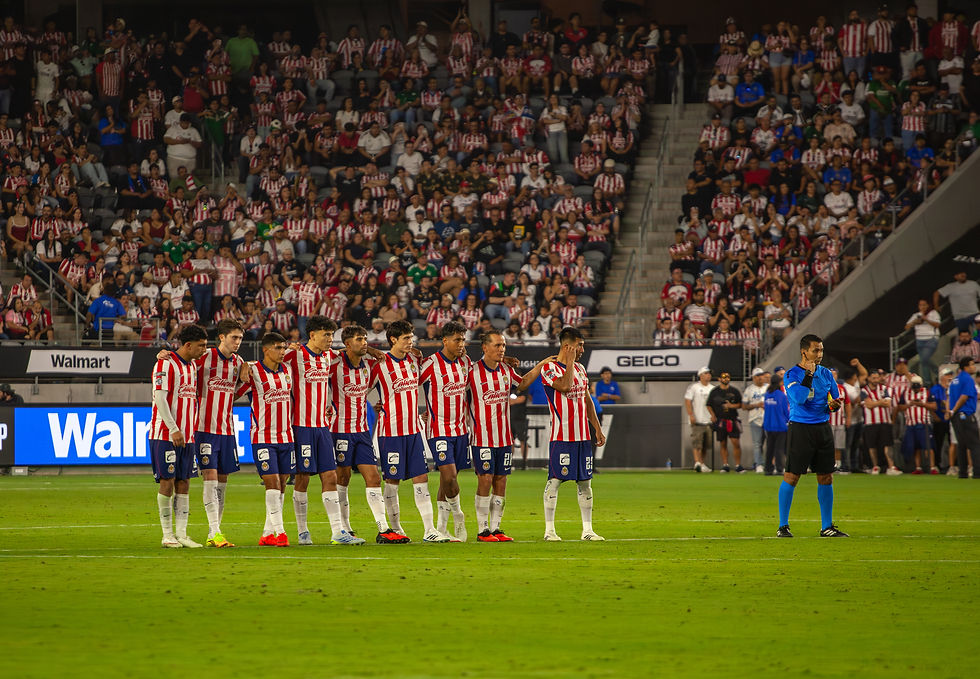
That puts additional importance on goalkeepers and penalty takers. Preparing for penalties isn't just something teams might need later in the tournament. A shootout can determine standings after the very first match.
And for supporters, it means a game that appears finished after 90 minutes can suddenly produce another wave of tension.
Five kicks.
Five responses.
One save.
One miss.
And the entire stadium changes.

Then the Knockouts Raise the Stakes
Once the tournament reaches the elimination rounds, the mathematics disappear.
A draw after 90 minutes again sends the match directly to penalties, but there is no consolation point waiting for the loser.
Win and continue.
Lose and go home.
That makes the same rule feel completely different.
During Phase One, penalties determine points.
During the knockout rounds, they determine survival.

Is It Better Soccer?
That depends on what you want from the competition.
Traditionalists can reasonably argue that draws are part of soccer. Sometimes two teams play evenly for 90 minutes and neither deserves to lose. A penalty shootout can also turn a strong team performance into a result decided by a handful of kicks.
But Leagues Cup isn't trying to replicate a traditional domestic league.
It's a short cross-border tournament built around MLS vs. Liga MX, and its format prioritizes decisive moments.
There is also a practical benefit: going directly to penalties avoids another 30 minutes of extra time during an already demanding portion of the club calendar.
But the biggest difference is what supporters experience.
There is always something left to play for.

Every Match Needs an Ending
That's what makes this rule more than a tournament gimmick.
Leagues Cup has taken one of soccer's most dramatic moments — the penalty shootout — and made it part of the competition's basic structure.
A match can be tied after 90 minutes.
But it can't simply end there.
Someone still has to step up to the spot.
Someone has to make the save.
And before everyone leaves the stadium, someone has to win.
The field talks. We listen.


Comments